
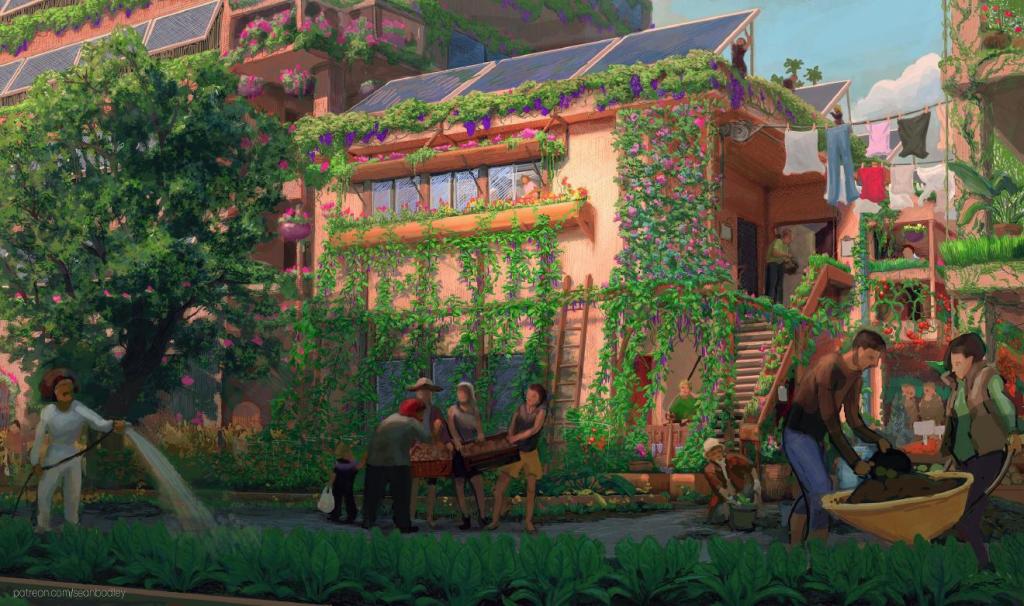
Greenhouse gas emissions. By recognizing unequal climate impacts, we have transitioned away from fossil fuels and towards clean electricity. We’ve reduced greenhouse gas emissions by 50% by 2030, with net-zero emissions by 2045. Electricity use from emerging industries such as data centres has been regulated, so that our efficiency gains are not wiped out by a massive increase in demand. Emerging sources of energy demand such as artificial intelligence are required to meet power and water efficiency standards before scaling up.
Development standards. For new buildings, retrofits, and infrastructure projects, we’ve established green development standards that take a lifecycle analysis approach. Total home and business energy use is trending downwards, even as our population has increased to a million people.
Green energy. All of our electricity is generated with zero carbon emissions, with renewables making up at least 50% of Ontario’s electricity supply. We have phased out the use of fossil fuels for electricity, heating, and transportation, with stringent standards for new buildings and vehicles. Retrofit incentives have replaced the need for natural gas heating and internal combustion engines in cars and trucks. Municipally-owned utility companies have embraced electrification, taking the lead on installing new heat pumps at scale for every household.
District energy. We have successfully implemented district energy systems in our most dense neighbourhoods, which provide heating and cooling in a centralized area, then distributing it through a network of insulated pipes. District energy represents a major new focus for utilities that were previously focused on maintaining fossil fuel infrastructure.
Food waste and animal agriculture. Methane, emitted from livestock and from organic matter decomposing in landfills, has been reduced to 2010 levels. All organic matter is composted thanks to the expansion of a municipal green bin program to all multi-unit buildings and businesses. Neighbours are able to collect free, nutrient-rich compost from waste collection facilities for their own gardens. We waste less than 10% of the food we buy. Our current Waterloo Region landfill can continue to meet the needs of 1,000,000 people in perpetuity.
Recycling. Improved tracing of recycling process, upcycling into industrial or infrastructure needs, local processing of recycled goods, improved sorting and diversion rates, reduced hard-to-recycle plastics.
Climate action: measurable outcomes
- Rate of energy use from local sources, and from zero-emission sources
- GHG emissions (by sector) [SWR, CIW]
- Waste diversion percentage
- Diversion of Organics [SWR]
- Number of buildings constructed to passive house standards
- Proportion of zero-emission vehicles (personal and commercial)
- Proportion of food wasted in homes and in businesses
- Electrical Vehicle Ownership [SWR]
- Number of people working in green jobs
 One Million Neighbours Waterloo Region