Local arts & sports journalism. We have active, independent media organizations that offer deep coverage of local arts, culture, and sports. They reach a broad audience through traditional and emerging media, informing neighbours and getting them excited about participating in the arts, attending cultural events, and supporting local sports teams.
Professional development for arts workers. A newly-established artists’ resource centre provides access to space, materials, information, and logistical support needed to engage with the arts. We have plenty of opportunities for professional development for artists without having to leave the region, including mentorship, paid performance and creation opportunities, and opportunities to exhibit or sell work. There are also opportunities for training and career development in all aspects of arts work, such as sound and lighting, promoters, etc. Local artists are involved in leadership and decision-making for arts institutions and venues.
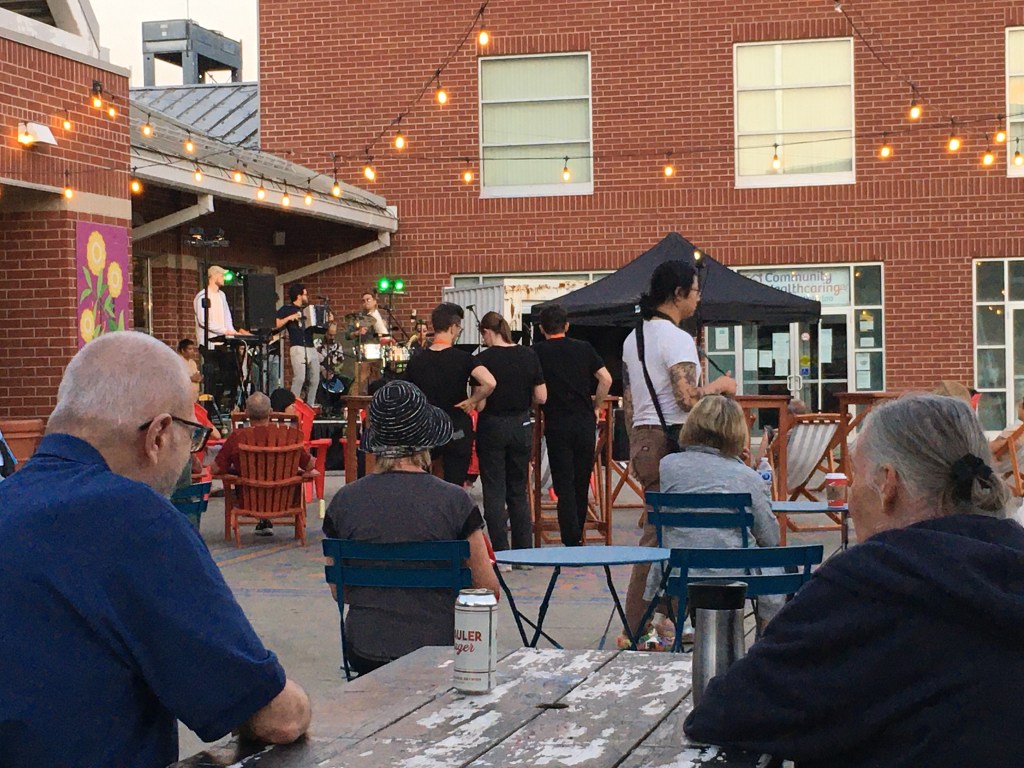
Public space and public memory. Neighbours identify with and understand the histories of the cultural institutions in our region, as they adapt to reflect new generations. Neighbourhood festivals and porch parties are embedded into our cultural fabric. People take collective ownership over these events. Public outdoor performance spaces, amphitheaters, and sports fields facilitate free and spontaneous activities, contributing to a community-centered cultural scene. Art and sport is brought to every neighbourhood, including rural ones, and free concerts and performances are the norm at local events. Public art, both sanctioned and unsanctioned, is encouraged as a means to reflect local identities and boost tourism while making art a part of daily life. We celebrate the artistic and athletic achievements of Waterloo Region with statues, plaques, and public spaces named after our hometown heroes.
National-level excellence. Major cultural hubs include Downtown Kitchener, Galt, Uptown Waterloo, St Jacobs Village, and post-secondary campuses. These areas offer artistic, cultural, and sporting attractions for residents of Waterloo Region and visitors from outside the region. They also act as centres of professional development, creating an on-ramp for local artists and athletes. Affordable and accessible studio spaces have been expanded, allowing artists at all career stages to thrive and showcase their work. Waterloo Region is home to many amateur sporting tournaments, including intercity competitions at the high school and post-secondary level. Neighbours know that they can go to any of these areas most days of the week and have a high-quality cultural experience. Waterloo Region is a major destination for arts, culture, and sport outside of Toronto.
A day in the life: art and acts of care
— Reflection by a roundtable participant
An artist wakes up any day of the week and has events and opportunities to look forward to. They have time to both work in the community and on their own artistic practice. When they have questions, there is an arts resource centre to have their needs met. They meet people through regular gatherings and arts events. Neighbours regularly provide healthy snacks and refreshments as an act of care in the community. There is an understanding and accommodation for all types of accessibility, including physical, cognitive, social, and financial needs. Everyone understands the value of arts and culture.
Neighbourhood-level access to art and culture. We bring art and culture into every neighbourhood. While our urban centres have major cultural institutions, every community centre and every neighbourhood has access to programming that enriches the life of all neighbours, from young to old. There is space for artists of all ages to practice their craft and showcase their work, whether they are amateurs or professionals. Everyone has a place where they are comfortable participating regardless of skill level. We have spaces that are physically and financially accessible for people to create and experience art. There is a culture of appreciation and showing up for the arts in Waterloo Region, which starts from a young age. People who live here feel less of a need to go to Toronto to experience world-class culture, and instead find a variety of engaging and critically acclaimed work to experience in their own Region. Arts programming for youth is as accessible as sports programming in our society, and community recreation centres provide low-cost supplies and equipment for participation in the arts. Youth do not just dream of having a successful art career, they are shown the roadmap to get there.
Funding reform. We have per-capita funding levels for artists in Waterloo Region that are comparable to the national average from grants such as the Canada Council for the Arts and the Ontario Arts Council. There is fair compensation for artists, with higher-than-living wage compensation and access to health benefits and wellness resources. In doing so, the mental and physical well-being of artists is supported, enabling them to continue creating and contributing to the community. It is common for artists to be paid a salary rather than having to rely on grant writing. The former structure of grant writing wherein artists compete with one another has been flipped on its head: instead, collectives of artists come together to develop a vision, set their terms, and then seek long-term, stable relationships with funders. We have dedicated funding streams for the arts, taking inspiration from Toronto’s Billboard Tax or tourism & hospitality fees. The move away from grant-writing changes what is possible and how we conceptualize art. Moving away from competitive grant-writing, the region has adopted long-term, stable funding models, including sponsorships and memberships, to provide artists with financial stability.
Leadership, representation, and cooperation. A revitalized Waterloo Region arts council and sports council are critical in coordinating funding, programming, and advocacy for local arts and culture. These councils act as focal points for fostering a thriving cultural ecosystem, promoting arts and sport as vital parts of the economy. We have representative participation in artists, athletes, funding, and attendees which helps us embody a commitment to equity, diversity and inclusion. There is mentorship and meaningful participation for new neighbours to deliver culturally relevant programming, especially in schools and in community centres. Arts submission processes are open by default and there is better collaboration between programming spaces to share audiences. Municipalities themselves do not compete with local non-profit arts and sports organizations for funding from provincial and federal governments.
Audience development. We have developed a strong culture of arts participation. For those who are not professional artists, neighbours have the opportunity to create art for fun and to participate as audience members. There is curated programming for all ages. Cultural programming reflects the racial, gender, and cultural diversity that exists in Waterloo Region, and neighbours see themselves reflected in the events that happen in their neighbourhoods. We cultivate audiences that embrace diverse and challenging experiences, and pride themselves on taking risks both as artists and as an audience. We have made arts programming available at various times throughout the day and week, ensuring that people with diverse schedules can attend and participate. Every child has access to arts participation in school with qualified teachers, and arts are interleaved with other subjects such as language, math, and science. The ArtShine program expands and is offered for free to students. Those that work in science, technology, engineering, and math fields understand the benefits of art beyond its applicability for professional development. Galleries, events, and venues have high attendance across the entire region.
Arts, culture & sport: measurable outcomes
- Awareness of local artists, athletes, venues, and events (audience survey)
- Number of free community arts, culture, and sporting events (by neighbourhood)
- Number of visitors in the local hospitality sector
- Municipal Accommodation Tax revenue collected
- Per-capita funding for arts and athletics in Waterloo Region
- Participation of racialized artists and athletes
- Employed / financially stable artists in the region
- Number of residents with Artist as their primary occupation
- Number of ticketed events
 One Million Neighbours Waterloo Region